There’s something quietly remarkable about Twelve Mile Creek. Winding through the Niagara Peninsula watershed, this waterway is home to Niagara’s only cold-water ecosystem – a rare and sensitive habitat capable of supporting breeding populations of native Brook Trout (Salvelinus fontinalis). Beneath the surface of the flowing water exists a delicate balance of temperature, oxygen, vegetation, and wildlife that has developed over centuries.
Today, urban development, erosion, flooding, and other impacts of climate change add growing challenges within Twelve Mile Creek. Fortunately, restoration efforts are helping protect this important ecosystem.
In 2025, NPCA received funding through the Ministry of Environment, Conservation and Parks Great Lakes Local Action Fund (GLLAF) to support two major habitat restoration projects with the Twelve Mile Creek watershed. The funding in an investment in ecological resilience, biodiversity, and the future health of Niagara’s waterways.
Why Cold-Water Streams Matter
Cold-water ecosystems are among the most sensitive freshwater environments in Ontario. Species like Brook Trout rely on cool, clean, highly oxygenated water to survive and reproduce. Even small changes in temperature or water quality can have major impacts on these habitats.
Healthy streambanks play a critical role in maintaining those conditions. Trees and shrubs along creek edges provide shade that keeps water temperatures cool, while their root systems stabilize soil and reduce erosion. When these natural systems are disrupted, the effects ripple throughout the ecosystem.
Over time, urban development within the Twelve Mile Creek watershed has dramatically changed how water moves across the landscape. Roads, rooftops, and paved surfaces prevent rainwater from soaking into the ground naturally. Instead, stormwater rushes quickly into nearby streams, increasing both the speed and volume of water flowing through the creek; resulting in increased erosion.
Fast-moving water scours creek banks, undercuts slopes, and carries sediment downstream. This sediment clouds the water, degrades fish habitat, and destabilizes the ecosystem. Severe flooding can further intensify these challenges, leaving sections of the creek increasingly vulnerable.
Rebuilding the Banks Naturally
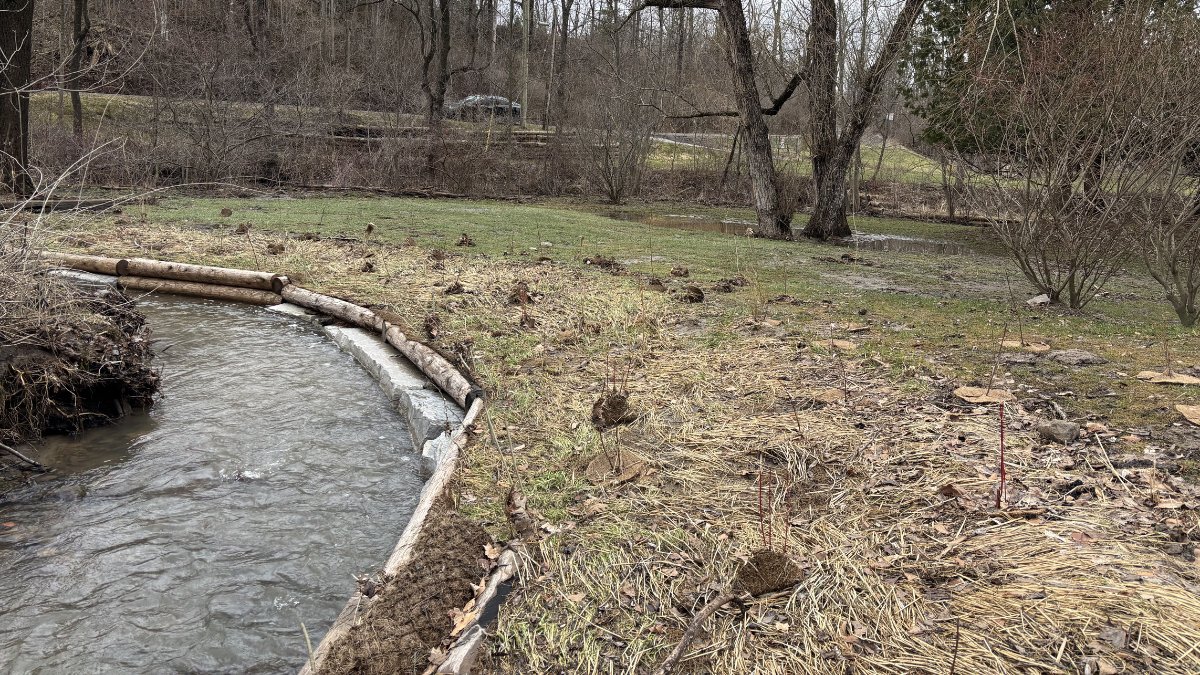
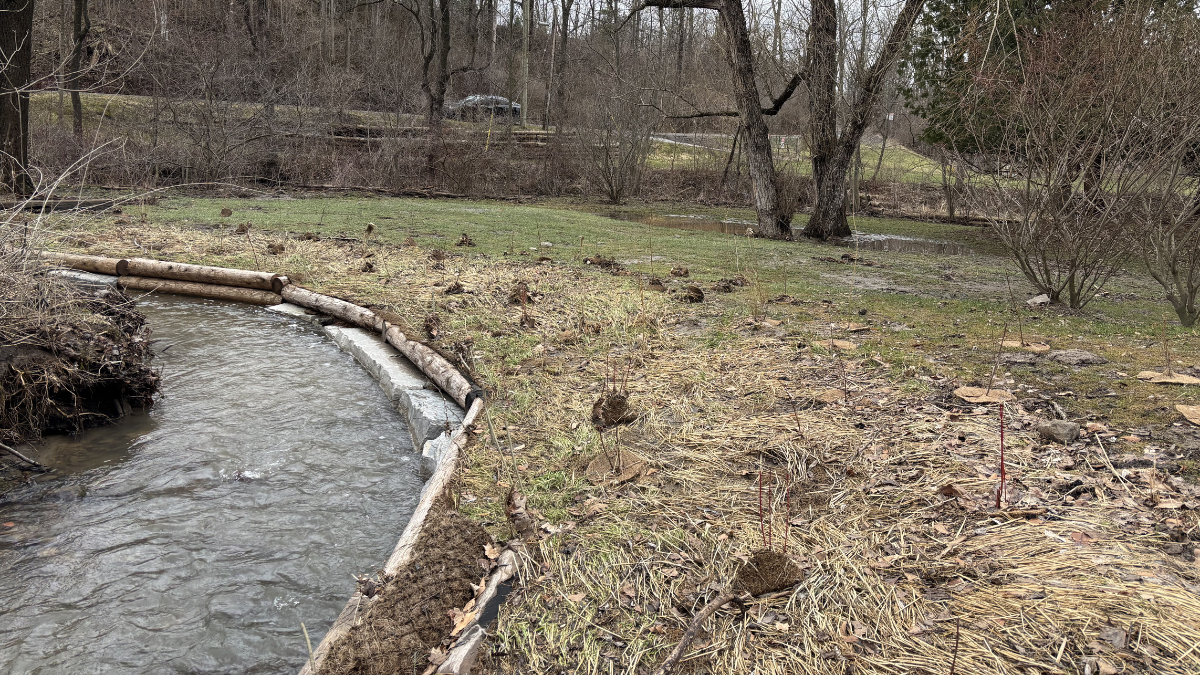
One of the restoration sites, located at St. John’s Centre, focused on replacing and expanding a deteriorating crib wall that had originally been installed more than 20 years ago.
Crib walls are retaining structures designed to stabilize slopes and streambanks. At this site, the original structure had significantly deteriorated over time, leaving parts of the bank exposed and at risk of collapse. Without intervention, erosion and sedimentation into the creek would continue to worsen.
The new restoration approach combined engineering with nature-based solutions.
Armour stone was installed at the base of the slope to protect against toe erosion, while stacked log crib walls created terraced levels up the bank. Each terrace was filled with soil and rock, then planted with native trees and shrubs that will gradually strengthen the bank as their roots grow deeper over time.
Geotextile fabric was also installed within the structure to prevent soil migration, and surrounding slopes were carefully regraded to improve long-term stability and support vegetation growth.
These efforts don’t just prevent erosion; they also help restore the creek’s natural ecological functions. Native vegetation filters pollutants, reduces runoff, provides habitat for wildlife, and helps maintain the cool water temperatures essential for Brook Trout and other aquatic species.
Nature-based restoration techniques like these are becoming increasingly important tools in adapting to climate change and building resilience within watersheds.
Protecting a Special Place for Future Generations
Twelve Mile Creek may appear small compared to the Great Lakes it ultimately feeds into, but its ecological importance is immense.
Healthy creeks support biodiversity, improve water quality, reduce flood impacts, and create opportunities for recreation, education, and community connection. Protecting these systems requires ongoing stewardship, investment, and restoration work that considers both the natural environment and the people who depend on it.
By restoring streambanks, planting native vegetation, and engaging local communities, the NPCA and its partners are helping ensure this unique cold-water ecosystem remains resilient for generations to come.
Because sometimes, protecting the future of a watershed begins with restoring the ground beneath our feet.